Hands-Off Elephant Experience at The Bush Camp Chiang Mai
Why The Ethical Elephant Experience Is Moving Away From Touch
Touch-based elephant tourism is losing favour across Thailand. Travellers increasingly want proof that welfare comes before entertainment, and that this preference is reshaping how camps like ours operate, including our hands-off elephant experience.
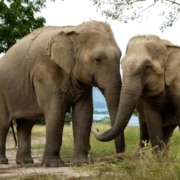
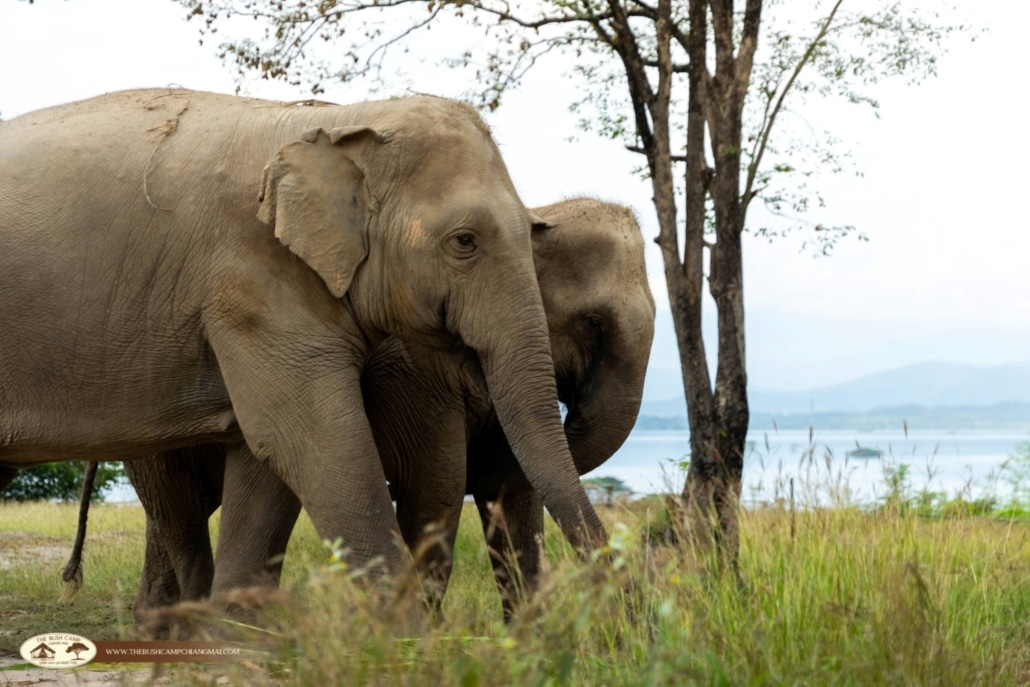
From 1 May 2026, we stopped hand feeding elephants at The Bush Camp Chiang Mai. Elephants are now fed at designated stations within their free-roaming habitat, at their own pace. Guests help our team prepare the food beforehand, then step back and watch. Any interaction happens only when an elephant chooses to approach, not because a schedule demands it.
This shift mirrors wider guidance in the industry. World Animal Protection’s elephant-friendly tourist guide encourages venues to move away from direct contact and towards observation-led encounters that protect an elephant’s autonomy. Our ethical elephant experience reflects that same principle, placing the animals’ comfort ahead of a photo opportunity.
The table below sets out what has changed, and why we believe it matters for both elephants and guests.
| Element | Before 1 May 2026 | From 1 May 2026 |
|---|---|---|
| Feeding | Guests fed elephants by hand | Food is prepared by guests and placed at designated feeding stations |
| Pace | Feeding followed a set schedule | Elephants feed and forage at their own pace |
| Interaction | Close contact was encouraged | Interaction happens only when an elephant chooses to approach |
| Focus | Guest photo opportunities | Natural elephant behaviour and welfare |
A Day Built Around Watching, Not Touching

A typical day at camp centres on quiet observation rather than staged encounters, with plenty of time to simply sit and watch.
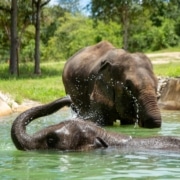
Mornings begin in our Free Roaming Forest, where guests sample Kafee Boran and kanom krok, the traditional coffee and breakfast snack enjoyed by our mahouts. From here, you can watch the elephants as they have their morning wash, cared for at a respectful distance by the mahouts who know them best. Later, guests help prepare the elephants’ food ahead of feeding time, then observe as the herd moves and forages across the habitat in its own time.
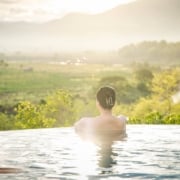
Afternoons are unhurried. Guests can relax by the infinity pool or join a sundowner at one of the mountain-top viewpoints overlooking the Ping River, before a buffet dinner of Thai and Western dishes. Between activities, our camp sits within a natural habitat for a wide range of birdlife, including the green peafowl, an endangered species we monitor with a small camera-trap project. It is a gentle reminder that the elephants are not the only wildlife worth watching closely.
Guests staying two nights have more time to slow down further, with a second morning to return to the Free Roaming Forest and observe the herd without a fixed itinerary. Full details of both tour formats are on our 2 Days 1 Night and 3 Days 2 Nights itinerary pages.
The Karen Mahouts Who Make It Possible
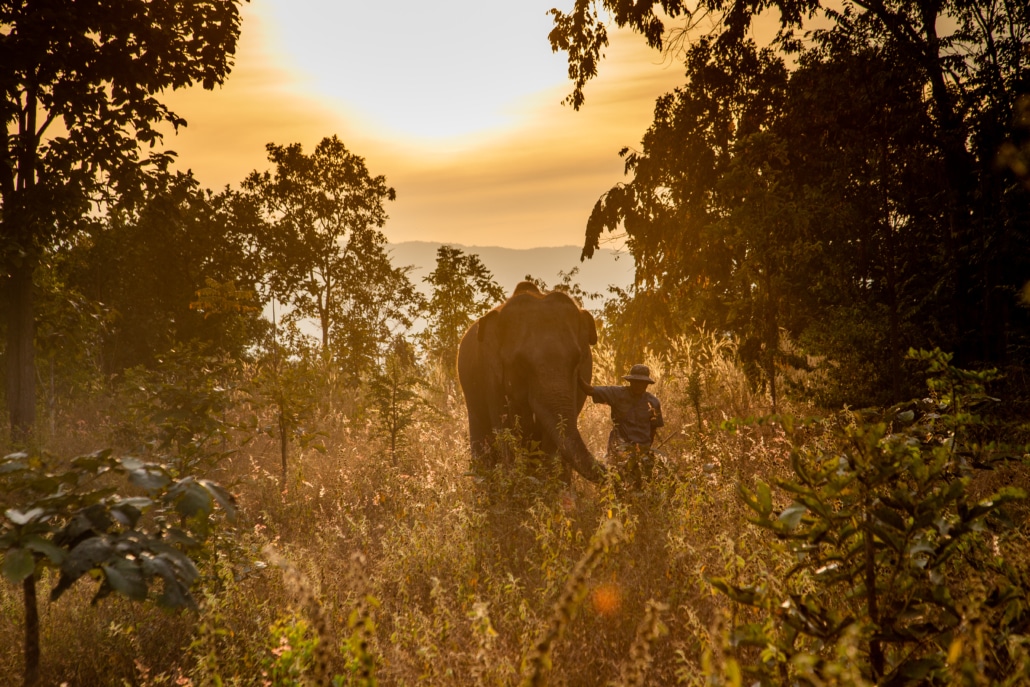
None of this would work without the mahouts who care for our elephants every day, long before and after any guest arrives.
Our mahouts are part of the Karen Hill Tribe, the community most closely tied to elephant care throughout Northern Thailand. Guests spend time with mahout families, helping pound rice, trying their handwoven textiles, and sampling home cooking. These traditions have passed through generations, alongside a deep, practical understanding of elephant behaviour that no manual could teach.
Many Karen mahouts grew up alongside elephants used for logging before tourism offered a gentler alternative. That history shapes how our team reads an elephant’s mood, energy and body language long before a guest ever arrives at the Free Roaming Forest. It is this expertise, more than any barrier or viewing platform, that keeps a hands-off approach both safe and genuinely calm. To learn more about this heritage, read our guide to the Karen Hill Tribe in Northern Thailand.
Choosing a hands-off elephant experience directly supports these livelihoods, rather than routing income through practices that strain elephants to perform.
Why Fewer Rules Mean A Deeper Connection

Removing touch from the experience does not mean removing meaning. If anything, guests tell us it adds to it.
Watching elephants behave naturally, rather than performing for a crowd, is consistently the part of the stay guests remember most. This approach sits alongside our wider conservation work, including solar-powered operations, waste reduction, and support for nearby elephant hospitals through donations of medicine and supplies. We also work with local communities on education projects, so the benefits of the camp reach beyond our own boundary. Read more on our sustainability and elephant conservation project pages.
The Bush Camp Chiang Mai was named Asia’s Leading Luxury Camping Company at the 2024 World Travel Awards, a recognition we credit, in part, to this same commitment to welfare over spectacle. It is a standard we intend to keep raising, not lowering, as more travellers look past marketing language and ask what actually happens on the ground.
Frequently Asked Questions
What changed with The Bush Camp Chiang Mai’s elephant experience in 2026?
From 1 May 2026, we stopped hand feeding elephants at The Bush Camp Chiang Mai. Elephants are now fed at designated stations within their free-roaming habitat. Guests help prepare the food beforehand, then observe as the herd feeds and forages naturally.
Can guests still get close to the elephants at The Bush Camp?
Closeness happens on the elephants’ own terms rather than by design. Guests spend extended time observing the herd from a respectful distance, and natural moments of connection can still occur, without hand feeding or forced interaction.
Who are the mahouts at The Bush Camp Chiang Mai?
Our mahouts are part of the Karen Hill Tribe, one of Northern Thailand’s largest hill tribe communities. Many Karen families have cared for elephants for generations, and guests can spend time learning about their daily life and traditions.
Is the hands-off elephant experience suitable for children?
Yes, children aged four and above can take part in the full elephant experience. Observing elephants at a distance is often described by parents as calmer and easier for younger children than close-contact encounters.
Ready to see what a truly hands-off elephant experience looks like? Explore our tours and book your stay at The Bush Camp Chiang Mai.
You might also like:
Inside the Elephant Experience at The Bush Camp Chiang Mai
Uncover the Karen Way of Life in Northern Thailand
Why The Bush Camp is Perfect for a Family Holiday in Chiang Mai