Guardian of the Ping: Ecosystem Conservation in Chiang Mai
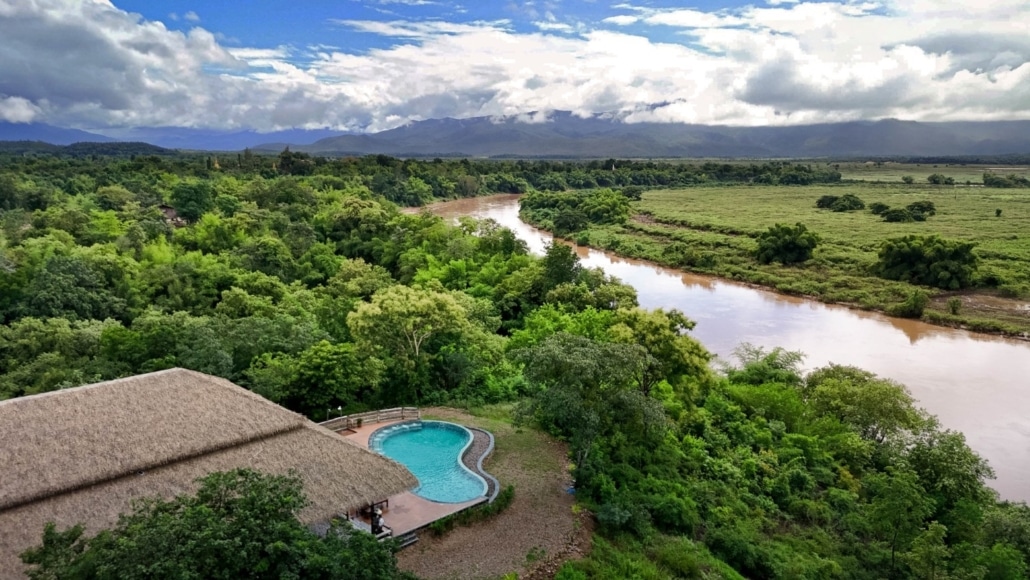
At The Bush Camp Chiang Mai, ecosystem conservation shapes almost everything we do. Our camp sits directly on the Ping River in Northern Thailand. Protecting this stretch of water and forest guides how we build. It shapes how we welcome guests. It shapes how we support the people and elephants around us. This article looks beyond our chain-free elephant experience. It explores the wider stewardship work happening across the property. That work spans riverside habitat care through to fair employment for local Karen mahout families.
Ecosystem Conservation Along the Ping River Basin
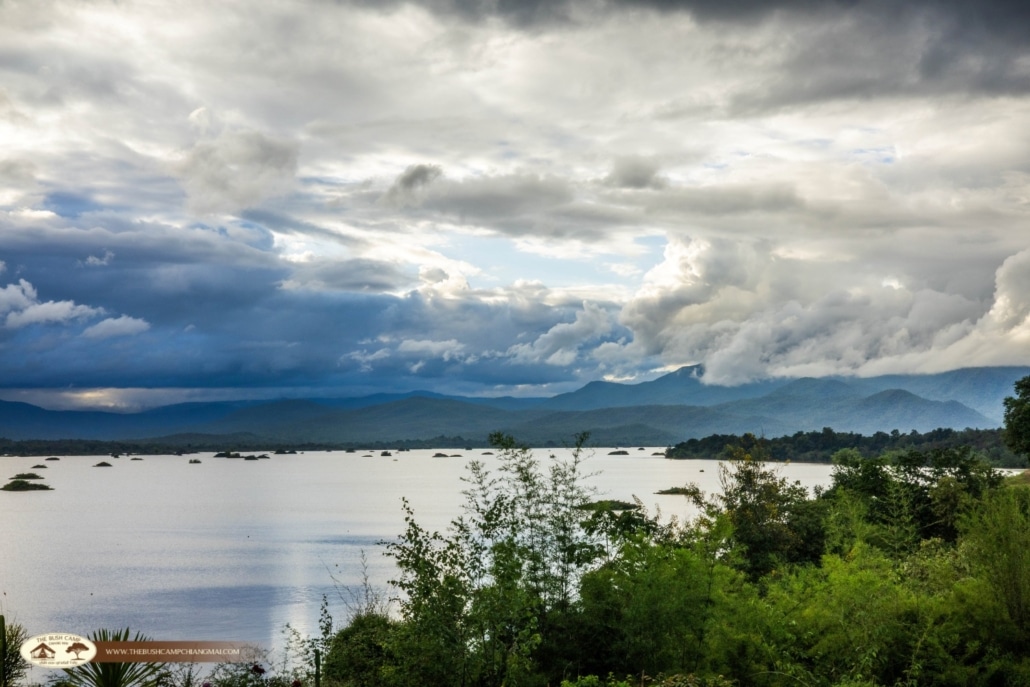
Ecosystem conservation along the Ping River basin runs through habitat awareness, vegetation care and ongoing wildlife monitoring. Every activity on site is planned with the surrounding land in mind.
Our camp overlooks the Ping River, with forested hills rising behind the tents and pool. Construction across the property was designed to limit disruption to this landscape. We use tented rather than permanent structures, so the camp sits lightly on the land.
We also run a Wildlife Monitoring Project. It uses camera traps to track species living around the river and forest. The cameras work quietly, without disturbing the animals they record. Early footage has already captured the green peafowl. This bird has been listed as endangered on the IUCN Red List since 2009. Our team has also taken part in conservation outreach near Mae Ping National Park. This national park lies in nearby Lamphun Province. The work supports wider efforts to protect the river basin, beyond our own boundary.
| Initiative | What it involves |
|---|---|
| Wildlife Monitoring Project | Camera traps track species such as the green peafowl along the river and forest |
| Low impact construction | Tented accommodation instead of permanent buildings, built by local artisans |
| Conservation outreach | Support for habitat protection work near Mae Ping National Park |
| Energy and water use | Energy efficient lighting, renewable sources where possible, low flow fixtures |
A Chain-Free, Hands-Off Elephant Sanctuary
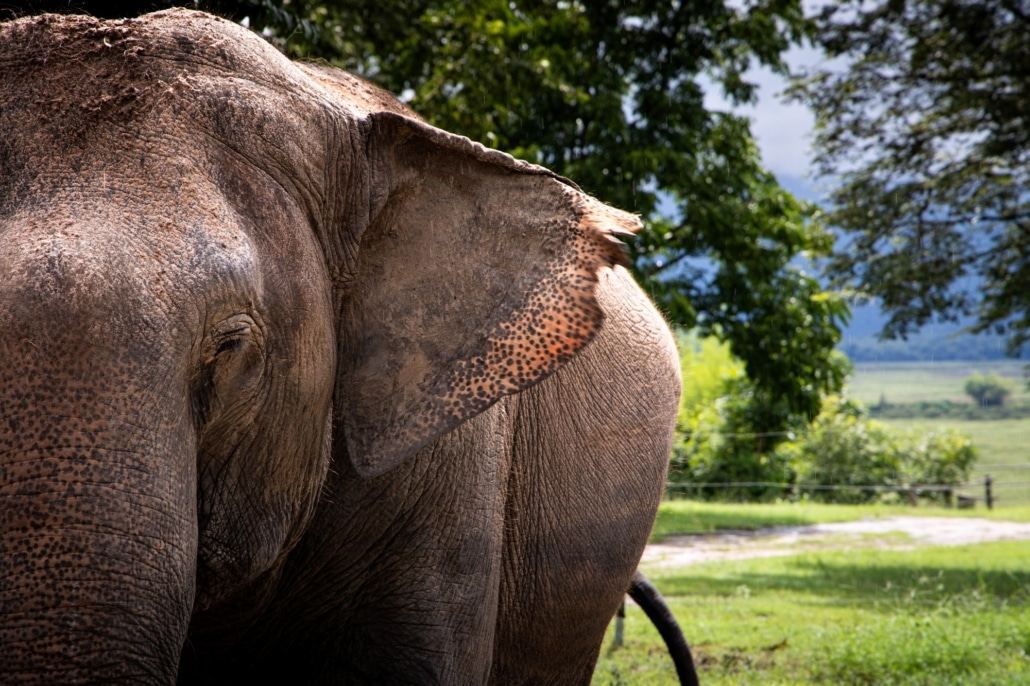
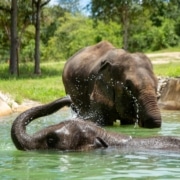
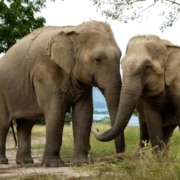
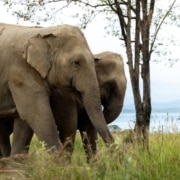
Our elephants live chain-free and are never ridden, a policy we introduced in 2010. From 1 May 2026, the ethical elephant experience moved further towards observation.
Guests still help our team prepare food for the elephants. Feeding now happens at designated stations within the free-roaming habitat, rather than by hand. This gives elephants more say over when and how they eat. Guests spend more time simply watching elephants forage and bathe. They can observe elephants interacting within their own space, entirely on their own terms. You can read more about how this works on our ethical elephant experience page.
You can also learn about the history behind this change. Visit our Elephant Conservation Project page for more. World Animal Protection publishes useful, general guidance too. Their elephant-friendly tourist guide helps travellers identify responsible venues anywhere in the world.
Eco-Conscious Operations Across the Camp
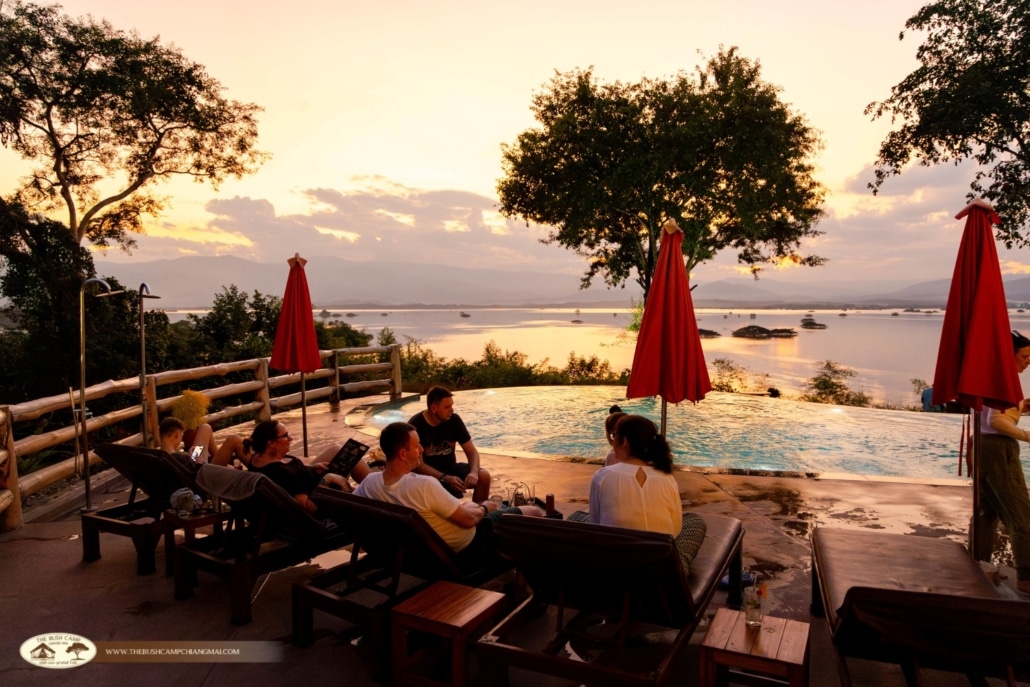
Sustainable operations run through every part of a stay, from the tents to the restaurant. Small daily choices add up across a camp of this size.
Our 20 luxury river view tents were built by local artisans. Materials were chosen to limit environmental impact wherever possible. Guests receive a reusable stainless steel water bottle on arrival. Refill stations are placed at every tour location around the property. Plastic bottles have been removed from restaurants and rooms. Straws are stainless steel rather than plastic. Toiletries are provided in refillable ceramic dispensers, rather than single-use bottles. Marketing materials have moved away from plastic pens towards plantable seed pencils.
Behind the scenes, we run recycling and composting programmes to reduce waste sent to landfill. This sits alongside energy efficient lighting and water saving fixtures throughout the camp. Full details of these initiatives sit on our sustainability page.
Supporting Karen Mahout Families and the Local Community
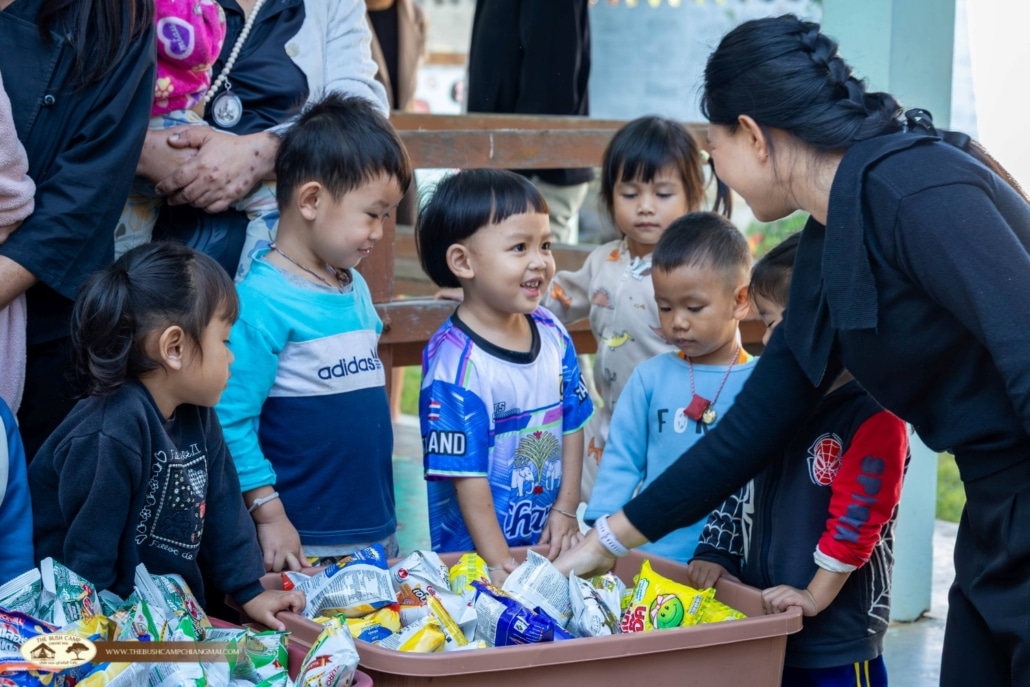
Community support sits alongside environmental work at The Bush Camp. Many of our mahouts come from Karen hill tribe families. These families carry generations of elephant handling knowledge.
We prioritise local employment and fair wages across the camp. We work closely with Karen families to share their culture and craftsmanship with guests. This happens in a respectful, low key way. You can learn more about this heritage on our Karen hill tribe page.
Beyond the camp, our team supports early childhood development at Baan Dong Dum school. We also take part in local community events there. Recent examples are covered in our articles on early childhood development and Children’s Day celebrations. We also continue to support elephant welfare beyond our own camps. You can read more in our article on supporting elephants across Thailand.
Frequently Asked Questions
Is The Bush Camp Chiang Mai a sustainable place to stay?
Yes. Our camp uses energy efficient lighting and renewable power where possible. We use low flow water fixtures and have removed single use plastics from restaurants and rooms. We also run an ongoing wildlife monitoring project along the Ping River.
Do the elephants at The Bush Camp still get fed by hand?
No. Since 1 May 2026, guests help prepare food for the elephants. The elephants then eat at feeding stations within their free roaming habitat, rather than being fed by hand.
Where is The Bush Camp Chiang Mai located?
The camp sits on the Ping River in Northern Thailand, roughly two hours from Chiang Mai airport. Guests stay in 20 luxury river view tents built by local artisans.
Can I combine a stay with Elephant Hills in Khao Sok?
Yes. The Bush Camp Chiang Mai and Elephant Hills are sister properties. Many guests pair Northern cultural stewardship here with Southern rainforest safaris at Elephant Hills in Khao Sok National Park.
Throughout August 2026, guests can save 20 percent on our Bush Camp 3 Days / 2 Nights package. The offer applies to bookings made between 1 and 31 August. It covers selected travel dates across 2026 and 2027. See full terms and book on our Bush Camp Safari 3 Days page. You can also browse every current offer on our promotions page.
You might also like: